Range Sum Query 2D
This article was translated by AI (LLM). There may be errors or inaccuracies. For the original content, please refer to the original version。
Problem URL: https://leetcode.com/problems/range-sum-query-2d-immutable/
Dynamic programming solution for matrix range sum queries
Solution Approaches
Iterative Summation
Code
class NumMatrix:
    def __init__(self, matrix: list[list[int]]):
        self.matrix = matrix

    def sumRegion(self, row1: int, col1: int, row2: int, col2: int) -> int:
        n_sum = 0
        for i in range(row1, row2 + 1):
            n_sum += sum(self.matrix[i][col1:col2 + 1])
        return n_sum
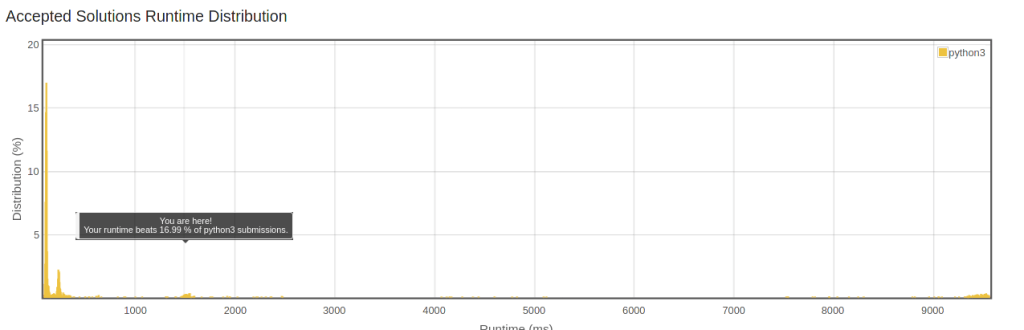
LeetCode Test
Dynamic Programming
Code
class NumMatrix:
    def __init__(self, matrix: list[list[int]]):
        self.matrix = []
        last_row = None
        row_size = len(matrix[0])
        for row in matrix:
            row_sum = 0
            l_row = []
            if not last_row:
                for i in row:
                    row_sum += i
                    l_row.append(row_sum)
            else:
                l_row = []
                for i in range(row_size):
                    row_sum += row[i]
                    l_row.append(row_sum + last_row[i])
            self.matrix.append(l_row)
            last_row = l_row

    def sumRegion(self, row1: int, col1: int, row2: int, col2: int) -> int:
        row1_0 = row1 - 1
        col1_0 = col1 - 1
        if row1_0 >= 0 and col1_0 >= 0:
            n = self.matrix[row2][col2] - self.matrix[row2][
                col1_0] - self.matrix[row1_0][col2] + self.matrix[row1_0][
                col1_0]
        elif row1_0 < 0 and col1_0 >= 0:
            n = self.matrix[row2][col2] - self.matrix[row2][col1_0]
        elif row1_0 >= 0 and col1_0 < 0:
            n = self.matrix[row2][col2] - self.matrix[row1_0][col2]
        else:
            n = self.matrix[row2][col2]
        return n
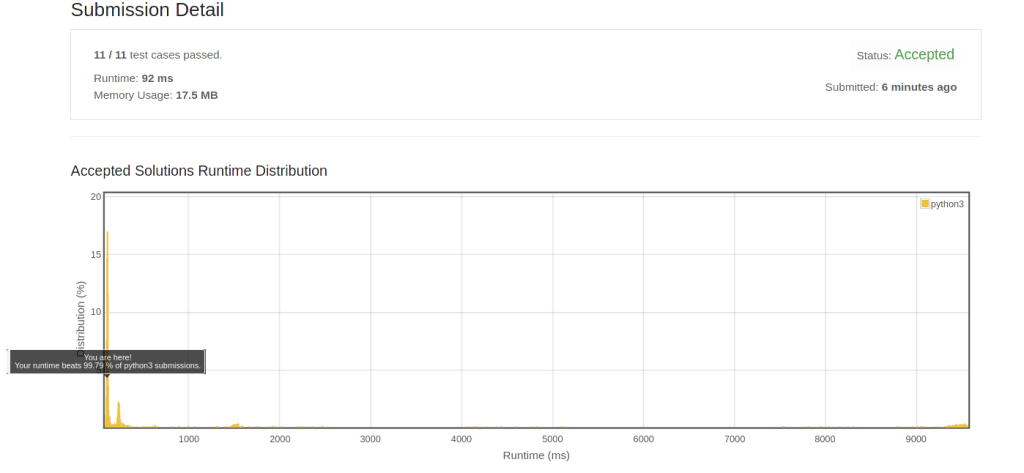
LeetCode Test
92ms / 17.5 MB (beats 99.79% / 20.87%).
Testing Method
a = NumMatrix([[3, 0, 1, 4, 2], [5, 6, 3, 2, 1], [1, 2, 0, 1, 5], [4, 1, 0, 1, 7], [1, 0, 3, 0, 5]]).sumRegion(2, 1, 4, 3)
print(a)
Summary
Dynamic programming essentially breaks down a large problem into smaller subproblems (almost stating the obvious).
The key optimization idea for this problem is to preprocess data during initialization specifically tailored for the target problem, thereby reducing time and space consumption during the final function call. That is, precompute matrix sums upfront rather than recalculating them during usage.